Just recently in the news, a woman was forced into the back of her car by gunpoint after shopping at Walmart.
Thank goodness she didn’t have any kids with her and she was later released.
Could this have been prevented? I believe so and I’ll explain.
As awesome as it would be for every mom to know some self defense skill to not just protect themselves but their kids too, it’s just not realistic.
I’ve taken a street tactical self defense class in the past and some of the moves I learned were amazing, but unless you lived and breathed it, it’s very difficult to be proficient at it.
And with two kids with multiple after school activities to juggle, and my firefighter hubby’s inconsistent work schedule…it was just too much of a stretch to maintain it.
One thing for sure though…
There were many eye opening and ah ha moments that I learned from it.
So the instructor that I had was an ex-military, ex-policeman/undercover agent.
Pretty impressive right?
He had so many crazy stories of things that people do.
The Man Hiding Underneath Your Car
One story in particular that I still remember until this day is a case where someone was hiding and waiting underneath a person’s car with a knife.
He’ll wait for the perfect moment to then cut the back of your lower calf area (aka your Achilles Tendon) to cripple you so that you cannot run away.
That person has now fallen to the ground and the guy gets out from underneath and throws you into the back of the trunk. Next thing you know, you wake up in a different country and you have been sold to be a sex slave.
Unbelievable, dumbfounded, shocked, outraged, astonished, speechless…everything I felt when I heard that.
It’s a scary world we live in.
So next time you come back to your car, take a peek underneath JUST to be on the safe side.
Here’s another one..
Groceries or Kids First
When you go grocery shopping, chances are when you’re done, you are pushing your cart full of groceries with your kids as well.
So upon reaching your car, what do you do first? Put your purse and kids inside the car so that you can put away the groceries away quicker and your kids are out of the parking streets? Or put your groceries away first?
For those of you who say you put your purse into the car first, you might want to reconsider, ESPECIALLY if you are also having your kids get into the car too.
Apparently, there was a case where a mom put her purse and kids into the car and then proceeded to put her groceries away in her trunk. Someone stormed into her car and drove away, with her purse and kids inside of the car!
Sounds so far fetched right? I still cannot believe someone would do something like that
But then again, I cannot explain many of the crazies that goes on in this world.
So if it is not realistic for moms to take the time out to learn physical self defense skills, then all that we can do to protect ourselves and our kids is make sure we do everything in our power to PREVENT it.
My biggest take away that was drilled into us over and over again is to…
“Be Aware!”
No matter where you are at and especially if you are in a parking lot at the store or mall at night time, always keep your eyes peeled for any suspicious activity or people who may be walking towards you.
In the example of the woman I mentioned earlier, it was stated in the article that she spotted a man crouching alongside the car next to hers.
Hindsight is 20/20 but that activity does seem slightly suspicious doesn’t it? If she had any gut instinct that it was kind of weird, then following it by going back towards the store could have saved her from that attack.
With the holidays right around the corner and more people shopping, it is vital that we stay vigilant and aware of our surroundings.
10 Tips That Can Make All The Difference
Get into the habit of walking around your car before getting in so that you aren’t surprised by any lurkers.
Get into the habit of locking your doors as soon as you get inside of your car.
Don’t wear a backpack purse to go shopping, especially now during the shopping season. And if you do, move it to the front. It’s much easier for someone to grab your bag from behind when you least expect it.
On a similar note, don’t carry around a checkbook because if that gets stolen, your home address will be known and that may bring forth unwanted visitors.
If you go to a club or bar, don’t leave your drink. If you do, go buy another one. Apparently, this is a common tactic for pimp sex traffickers to capture their next victim.
Don’t unlock all the car doors when pumping gas. Thieves have been known to open the passenger side door and take your purse in the front seat without you even knowing.
If you’re up to it, watch the TV series Forensic Files. Criminals have confessed/bragged about being able to be a copycat of the cases that gets portrayed on there. It’s not to get you paranoid but to help you be informed of what’s possible.
Stay aware. Scan your surroundings as you walk to your car. The moms more likely to get attacked are the ones distracted by their kids, are on their phone or are juggling too many bags in her hands.
Be aware of vans that are parked next to you. It’s easy for perpetrators to slide open their door and grab you or your kids without anyone even noticing.
Last but not least, trust your motherly instincts. If something feels off or not right about the situation, remove yourself and your kids from it.
These are just a few things that have been shared with me as well as from what I have learned over the years and I hope they are also useful for you to know.
The best form of protection is always going to be prevention.
Your chances of becoming a victim is lessened if the perpetrators can see and sense that you will catch on to them before they can get to you and the only way for that to occur is for you to…
Be and stay AWARE at all times.
If you found any of this information helpful, please share it. The more we can help to spread this message, the more empowered us moms can be to keep ourselves and our kids safe.
Fall just started so what is right around the corner?
No, I’m not talking about Christmas. Although doesn’t it seem like the stores are putting out xmas decorations earlier and earlier every year! Oh vey…
Anyways, if you have kids, that means it’s time to brace yourself for the flu season that is coming up. Especially if you have them in day care or a school setting.
When I used to work in the hospital setting, this meant we were getting ready for this ourselves right about this time because “flu season” is usually between Oct-Mar time frame.
Now I know there is an ongoing debate on whether or not getting the flu vaccine actually causes you to get the flu. Some people claim they get sick right after they get it, or they claim they still get the flu anyways, therefore, they stopped getting the shot altogether.
I’m not here to push you in any one direction but merely to share with you some of my thoughts on things to think about if you’re wondering to yourself whether or not to have you and your kids get the flu shot.
The most common reason I hear on why people don’t get the vaccine is, “I get sick anyways, so why even bother?”
But…if it is true that the flu vaccine causes you to get the flu, then wouldn’t every single person who receives the vaccine also get the flu?
What if you would have gotten sick anyways…
AND it was a mere coincidence that it happened RIGHT after getting the shot?
Here are some possible reasons why you could still get sick after getting the flu shot:
1) You were exposed to a different flu virus strain than the one in the vaccine.
2) You were exposed to the flu virus before or 2 weeks after the shot. It takes about two weeks for your body to build up protection for it.
3) You could be experiencing some mild reactions to the vaccine. According to the CDC, the most common side effects are soreness, redness, tenderness or swelling and in some cases, low-grade fever, headache and muscle aches also may occur that lasts 1-2 days.
4) Or yes, you got sick anyways but without the vaccine, the severity of the illness could have been extremely worse.
What some people do not realize is that the flu vaccine is meant to only protect you from the top virus strains that the experts have identified is the most common ones for the current year.
And this changes every year.
So it is impossible to know 100% which virus strain to include in the vaccine.
But some protection based on highly educated guesses are better than no protection right?
On the flip side, I have heard people who say they never get flu shots and never get sick.
They can count their lucky stars.
But I have been around the block long enough to know what the other side of having the flu looks like and I’ll take my chances with the shot.
If you’re a young, healthy adult, then getting the vaccine is not as critical for you (still recommended) but if you’re a young child, the elderly or someone with chronic illnesses, getting sick with the flu is more serious for these groups.
It can be quite severe and even down right life threatening.
If you do choose to opt yourself and your kids out of getting the flu vaccine though…
Do yourself and everyone else around you a favor.
Take extra precautions when it comes to being around others and be vigilant about washing hands.
If you are near someone who has the flu, the virus can spread to you even if that person just coughs, sneezes or talks to you.
Or if you just touch a surface that has the flu virus left from someone else, and you unconsciously use your hand to touch your mouth, nose or eyes, you will contract the virus.
Then the virus will pass on from you to another person and from that person to another and so on and so forth.
With all that being said, everyone does react to things differently so you really do need to do what is best for you and your family.
Like with any other decisions you have to make for your kids when they are young, you need to weigh all the risks and benefits and ask yourself what path you would rather deal with.
If you found any of this information helpful or know someone who it could help, please share…because, “sharing is caring!”
My son: Mom, when I turn 8 years old, I don’t need to use my booster anymore right?
Me: umm…yes and no?
According to the National Highway Traffic Safety Administration (NHTSA), kids need to stay in a booster seat until they are able to wear a seat belt properly.
This means when the seatbelt is strapped on, the lap belt needs to lie across the upper thighs and the shoulder belt across the shoulder and chest.
So it doesn’t matter if the kid is 8 years old. The most important criteria is that the seatbelt is in the proper position.
In response to my son…
“Yes, mommy knows some kids don’t need to be in a booster seat once they turn 8 years old, but because your seat belt is too close to your neck, you need to stay in your booster for just a little while longer.”
I was expecting some resistance but he took it pretty well.
The next day, he wanted to try sitting again without the booster to see if he grew any. LOL!
(Notice with the image on the left, the shoulder belt is not where it should be, confirming that my hunch was correct. He needs to stay in his booster!)
It’s definitely a common question that even parents ask themselves though when their child reaches a certain car seat milestone.
Things like…
“What age can my child legally go from rear facing to forward facing?”
“What is the age and weight limit on when kids can move out of carseats or boosters?”
“When can they sit in the front seat?”
It’s understandable to forget the exact weight and height requirements for each milestone. I have to remind myself all the time.
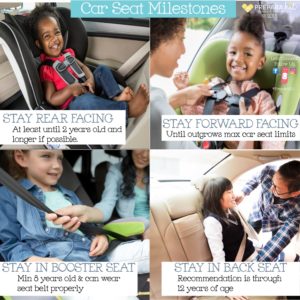
The National Highway Traffic Safety Administration (NHTSA) recommends children stay rear facing at least until they reach the max height or weight limit of the manufacturers car seat guidelines.
In some states, like California, it’s required that kids stay rear facing until at least 2 years old UNLESS the child weighs more than 40 lbs or is more than 40 inches tall.
For the average kid, that’s pretty much 4-5 years old already so expect your child to be rear facing until they are 2 years old.
So here are the nuts and bolts of it:
For optimal safety, plan to have your child stay rear facing until they are at least 2 years old. In some states, this is required.
Which means if you’re shopping for a new car seat, look for ones that have a higher max height/weight limit. There are car seats that go up to 30lbs and up to 32”.
Kids should stay in their forward facing car seat until they have outgrown the max height or weight limit of their car seat.
Then it is a booster seat until they can wear a seat belt properly on their own. This is typically anywhere from 8-12 years old. In California, they also need to be at least 4’9”.
The NHTSA recommends that you keep your child in the back seat at least through age 12. There are no hard rules for kids sitting in the front seat, but the general consensus is that they are always safer sitting in the back.
The main thing to keep in mind for all these different milestones is that with each advancement, the level of safety and protection decreases.
As much as we look forward to not having to deal with car seats, especially traveling with them, it really is in their best interest to keep them in their appropriate car seats for as long as possible.
If you enjoyed any of the information in this article, make sure to follow us on social media and share it with another mommy friend!
Wouldn’t it be wonderful if we could keep our kids inside this bubble where we know they can never get themselves injured or hurt in any way? Or even if we could make sure that we’ll always be by their side to protect them from all the dangers in the world.
Reality check…
It’s simply not possible. Kids will be kids and your best bet is to teach them how to look out for their own safety and implement some strategies for handling different situations in and outside of the home.
Let’s cover some in home safety tips to consider:
This first one is an easy one but very challenging for young kids to adhere to. Teach them to never open the door for anyone unless they have been instructed to do so. We get it, when someone rings the door, they get super excited and automatically run to see who is there and we don’t want them opening the door to a potentially dangerous person
Have your kids memorize your phone numbers and their home address. Once in awhile, have them repeat it so that it stays fresh in their minds
Teach them how and when to call 911. Or if they can’t call, run to the neighbors house for help. Run through some scenarios and have them tell you what they should do.
Have a list of emergency contact numbers
Poison Control
Close relatives
Neighbors
Trusted local parents
Have a smoke detector in every room. Most new detectors these days will beep at you when the batteries are dying to alert you to change them out.
Have a carbon monoxide detector in living and bedroom spaces. Carbon monoxide gas is colorless and odorless so without these in place, it will not be detected.
Cover your unused electrical outlets. Even better is if you install the outlets with the safety features already built into it, that way you don’t need to worry about the kids prying them off or it getting taken out and misplaced.
Keep medicine and cleaning agents locked up or out of reach.
Talk to your kids about Internet Safety:
Teach them never give out personal information to anyone online
Put time restrictions on their usage
Have computers be located anywhere but inside their room
Track their history to see where they have visited
Have regular discussions on what is appropriate and what is not for them to interact with
Restrict which sites they can visit by setting this in the parental controls
Take some time out to discuss, map out and role play an emergency home evacuation plan
Decide on a central location to meet outside of the house
Practice what to do in case of a fire
If they can evacuate, crawl or stay low to see under the smoke
If they are trapped, stuff a towel under the door open a window and yell for help
Do not hide in a closet or under the bed. Hiding makes it harder for the firefighters to find you in smoky conditions
Use escape ladders if you have a multiple story house. There should be one in every bedroom. Make sure to familiarize yourself on how to use it.
Have emergency food and supplies on hand
Image by philipbase via Pixabay
Now let’s start with some outside of the home safety tips:
Theme park (or any crowded event) nightmare: You lose your kid in the crowd! Teach them to stay calm, stay put and flag down someone who works there. Emphasize with them that you will make your way back to find them and staying put will make that easier to do.
Or if you’re like a friend of mine who goes to Disneyland on a regular basis, before they start their day of adventures, they remind their kids of their special meeting spot (one for each park) to go to if any of them were to ever be separated.
When you’re out on vacation, don’t post pictures or videos on social media. This will just create opportunities to have your home burglarized
Teach them to be aware of their surroundings at all times. Know to look for cars coming. Know when it’s safe to cross the streets. Teach them not to run in parking lots. And of course, constantly remind them not to talk or go with any strangers under any circumstances.
If you found any of this information to be helpful, please share with a fellow parent.
One of the most exciting things about having a baby is all the new and cool baby products that you get to start shopping around for. It is so fun, and overwhelming at the same time, to walk into a baby store and seeing aisle after aisle of things to get.
But it quickly gets very overwhelming because you start asking yourself, “Do I need this?” or “Which one should I get”. You could literally spend an entire day in the baby store adding things to your registry.
Most physical and online stores with registries have recommended lists to help guide you. If you google baby registry items, you will get plenty of articles listing out their most favorite products, including this article that you’re reading.
There are more and more new products coming out everyday. Many of which I come across either in the stores or from other moms using it and then say to myself, “I wish this was around when my kids were babies”.
Below is a list of practical items that I either couldn’t have survived my kid’s younger years without or that I wish was available because it could have solved a problem I was dealing with on a regular basis.
A Co-Sleeper or Bassinet
Yes, they only use this for a short period of time but the first few months is when it’s so worth it to have. It makes it so convenient to have them by your side for the first few months. I remember being able to just open my eyes without getting up and still being able to see my baby. It’s comforting to know they are within arms reach at all time. Plus, its a time saver when you think about how many times you will end up having to get out of bed to get to your baby…and when you’re already sleep deprived, you need all the extra minutes of sleep you can get.
This HALO Bassinest Swivel Sleeper not only can be adjusted to the height of your own bed but it also swivels so you can position the baby closer to you if needed. Definitely an upgrade to the regular Co-Sleeper I used.
A Sound or White Noise machine
We used a white noise machine every single day when the baby sleeps. It helps to even out the noises that are happening around them. Babies get easily startled when they hear a loud sudden noise and you definitely don’t want them waking up from their beauty sleep. Especially when you’re also trying to catch some zzz’s with them. Having the consistent even noise helps drown out the outside noise.
Having one while you’re traveling is also a must, especially when you’re visiting family because conversations do tend to get loud. Nothing makes a family visit go south than spending your entire time dealing with a cranky baby because s/he didn’t get their full naptime in.
The machine we used was the Soundspa Lullaby and it lasted us a pretty long time. Looks like this is a newer version from the one we used back then. Having options to choose from is always helpful so the Skip Hop Moonlight & Melodies machine wasn’t around when we needed it but it came highly recommended by other moms. It also has a portable version to travel with, which is nice.
This was something I wish was available when my kids were younger. The regular baby bathtub got too small really quick and I ended up having to use the bathtub for them but it wasted so much water. Having this Dam would have been so useful. You can adjust it and just fill up a portion of your tub with water instead of the entire tub. Such a neat idea!
Owlet
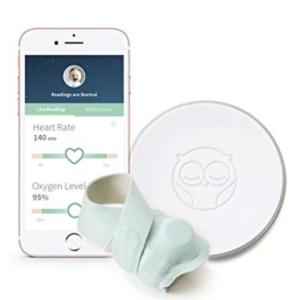
As a new parent, you hear plenty of stories of SIDS and of course, get very paranoid about it withy your own child. In 1994, the American Academy of Pediatrics coined the “Back to Sleep” term to raise awareness for their safe sleep recommendations.
With innovative technology these days, there are products like the Owlet Smart Sock Baby Monitor that brings somepeace of mind to parents. When I first heard about this, as a nurse, I thought it was a little overkill actually. But I could definitely see the usefulness of this, especially if you have a preemie baby.
I came across another similar device called the Cocoon Cam Plus that came highly recommended by a handful of other moms who have used it. Since these baby monitor are larger ticketed item, I always find it best to compare multiple options.
I love this thermometer. After using different types of thermometers in the home as well as when I was caring for patients in the hospital, I have found this to be my all time favorite and it is what I currently use now. It is accurate and it works by just scanning the forehead. Yes, it is a little pricier for a thermometer, but IMO it’s worth it.
This is great for 2 main reasons. 1) You don’t have to worry about bacteria collecting on the tip because it doesn’t touch the skin at all and 2) You don’t have to wake the kids up during the night to recheck their temps because they won’t even feel a thing. Plus, all the recordings gets synced to an app where you can check previous temperatures. Very useful to track when the last time medicine was given as well.
NoseFrida Bundle Kit
Now these weren’t around when I really needed them so I had to resort to the regular bulb suctions, which I found to be ineffective the majority of the time. The hospital ones definitely worked a lot better than the store bought ones, but unfortunately, they aren’t for sale.
These NoseFrida at first glance seems very disgusting but other moms seem to rant and rave about them. I would definitely try this out over the regular bulb suction if I had to do it all over again because the regular store bulb suctions are worthless.
Baby First Aid Kit
And last but not least, we had to mention our very own PreparaKit Baby First Aid Kit that we put together for moms. It’s a very popular item for baby shower gifts as well as registry items on Amazon. We’ve had many compliments on how easy it fits into their diaper bag and how useful it has been having it on hand.
I hope you have enjoyed some if not all of these recommendations. To make things even easier because that’s what we’re all about, simplifying and making things easier for our PreparaMoms, I took the liberty of creating an Amazon Registry that includes all of these items in one place so that you can view them and quickly add them to your registry if you so desire.
What’s your must have baby item? Please comment below. I’d love to know about it!
Send or share this to a friend if you found it to be helpful in anyway.
*As a side note, when you click some of the links on this site and buy, I may receive a small referral affiliate commission. When I suggest certain products, it is because I have personally had good experiences with it and/or I have researched it or it came highly recommended from other moms I know. We do thank you for your support.
PreparaKit is a participant in the Amazon Services LLC Associates Program, an affiliate advertising program designed to provide a means for sites to earn advertising fees by advertising and linking to Amazon.com.
Parks and playground structures are an essential part of parenting life. Not only is it a place you can take your kids to go hang out so that they aren’t cooped up inside all day long but it’s also a place that is FREE and the kids love it.
It’s also the perfect place to have a playdate. Kids can run around with each other and the moms can socialize.
The only downfall to being at the park is actually what makes the park so fun…the play structures. There’s an injury waiting to happen at every park.
And as a 20-year firefighter/paramedic, I can only recall a small handful of 911 calls at a park or playground that actually were serious. Most of which were the result of someone doing what they shouldn’t have been doing.
For example, this most serious 911 call I responded to that I will never forget…
“A 5-year-old child climbed above the monkey bars. He was pretending that he was walking a tightrope across a “sea of lava”. He lost his balance while walking and fell through the monkey bar handles. He hit his head twice on the way down. Once on the handles and the second on the ground. It was about a 6 to 8-foot fall.
When we got there, the child was unresponsive. Any first responder can attest to feeling very scared when approaching a child that is quiet. This child presented with agonal and snoring respirations. In other words, he was barely breathing. He had a small amount of blood coming from his ears which indicated a skull fracture and his pupils were unequal. Everything summed together meant major head trauma.
We started breathing for him by placing a tube down his throat and secured him to a board to ensure there was no further injury to his spine. Unfortunately, his spine was the least of our concerns. We loaded him up in the ambulance and off we went to the trauma center. He had multiple seizures in the back of the ambulance in which we had to give him anti-seizure medications for. We fought hard for his life, but unfortunately his tiny brain could not handle the amount of force inflicted on it”.
There’s not much the average person without medical training can do for someone with a head injury. Prevention is the key for head injuries. From a medical professional who has seen one too many accidents, please keep a mindful eye on your children when they are playing in and around the playground.
If your child has a head injury, keep an eye for any headaches, visual disturbances, balance issues, nausea, or they are slow to respond and seek medical attention as soon as you can.
Another 911 pediatric call that was also critical but luckily had a positive outcome was for a child on a school playground…
“A 10 year old student with a known allergy to bee stings got stung while playing on the school playground during recess. The school staff had an Epi-Pen provided by the child’s parents. The staff promptly administered the Epi-Pen and the child’s allergic reaction subsided.
They called the parents who were on the way to the school. While waiting, the child went into another allergic reaction. Come to find out, the bee stinger was still in place injecting venom into the child.
911 was then called. When we got there, the child was trying to breathe, but couldn’t. She had tears of fright running down her face as she fought for her own life. Her airway was rapidly closing and she was going into respiratory (breathing) failure.
As always, we worked rapidly and gave her 2 additional doses of medication and put a tube down her throat to help her breathe and prevent her airway from completely closing.
We loaded her up in the ambulance and drove code 3 (aka super fast!) to the hospital. When we got to the emergency department, her symptoms had resolved and the hospital staff was able to remove her breathing tube that I had placed.
Her mom had met her at the hospital. They reunited at the bedside and they both hugged and cried. I couldn’t help but tear up seeing this happy mother and daughter moment.
AND this is why I do what I do”.
The points to take away from this story is to have an Epi-Pen with you if there’s a known allergic reaction. Call 911 or seek immediate medical attention even with an Epi-Pen as their airway can close quickly and will cause respiratory failure.
I’ve had a number of severe allergic reactions from bee stings and being exposed to different allergens. Many people carry Epi-Pen which is definitely a life saver, but they still need medical care. The Epi-Pen is only meant for the quick immediate action but will wear out after 5 mins.
Now on the flip side, there are definitely very minor injuries that happen all the time at the playground.
Here are some typical scenarios that I’m sure most of you have come across at one time or another, and if you haven’t, be prepared…
Kids are running too fast, trip over an uneven pavement, fall and scrape their knees and hands.
Your child is climbing the play structure, fall and breaks an arm.
A bunch of kids are playing chase with one another and one of them twists and sprains his ankle
Parks with wooden play structures or wooden benches means one thing, splinters in the fingers.
Kids riding their bikes, hit a bump and lose control of their bike, fall down and end up with a huge gash on their leg from their leg getting caught between the pedals.
These are all very easy to manage injuries that any mom or dad can easily handle if they make sure they always have a good first aid kit on hand.
There’s nothing like having your child run up to you with a bleeding cut on their finger and you have no way to stop it.
Take Along First Aid Kit – Kid Joy
Which is why we have put together our handy Take Along First Aid Kit that fits perfectly in a diaper bag or purse without taking up much room. It has all the basic essentials that you will need to treat all those pesky minor injuries that the kids t
end to get themselves into. We make it easy to be prepared.
All in all, the playground is a very safe place and it’s ultimately up to the parents to make it safe for their children. In most things involving children, prevention is everything. Things like wearing safety equipment (i.e. helmets) and good ole supervising (making sure they’re not doing what they shouldn’t by doing).
I recommend to all parents to take a first aid and CPR class for kids. It’s a very good class that will give the knowledge, skills and abilities to be able to handle the everyday “small emergencies” and confidence to handle more serious emergencies.
*PreparaKit is a participant in the Amazon Services LLC Associates Program, an affiliate advertising program designed to provide a means for sites to earn advertising fees by advertising and linking to Amazon.com.
Struggle with staying on top of your bills and budgeting?
Do you stress out and dread when the 1st of the month rolls around?
Tired of living paycheck to paycheck?
Have constant arguments with your spouse around the family finances?
Have no clue on how to even get in control of your financial life?
Download this FREE Monthly Budgeting Action Plan, which includes Worksheets with step by step instructions on guiding you exactly on what you need to do to set up your own family budgeting plan that works for you and your family.
Struggle with staying on top of your bills and budgeting?
Do you stress out and dread when the 1st of the month rolls around?
Tired of living paycheck to paycheck?
Have constant arguments with your spouse around the family finances?
Have no clue on how to even get in control of your financial life?
Download this FREE Monthly Budgeting Action Plan, which includes Worksheets with step by step instructions on guiding you exactly on what you need to do to set up your own family budgeting plan that works for you and your family.
Do you struggle with getting your kids to clean up their room?
Are you ready for your kids to be more responsible?
Would you like your kids to be able to manage their time better?
Ready for a simple way to teach your kids good money management habits?
Download this FREE Family Chore and Money System Action Guide. It includes worksheets with step by step instructions on guiding you exactly what you need to do to set up your own chore, schedule and money management plans.





 NoseFrida Bundle Kit
 Baby First Aid Kit
 I hope you have enjoyed some if not all of these recommendations. To make things even easier because that’s what we’re all about, simplifying and making things easier for our PreparaMoms, I took the liberty of creating an
  ke, fall down and end up with a huge gash on their leg from their leg getting caught between the pedals.