Yes, it’s that time of year again! The holidays are upon us, and it’s time to head to the attic, your basement, or your storage closet and bring out those boxes of decorations that have been collecting dust for the last eleven months. It doesn’t matter if you celebrate Christmas, Hanukkah, Kwanzaa or maybe all three! You know you love it when all of the lights are up, the tree is decorated, and the candles are lit…but while you’re busy decorating the house and admiring the romantic glow of the fireplace, safety might be the last thing on your mind.
According to the U.S. Consumer Product Safety Commission (CPSC), there were 240 injuries per day related to do-it-yourself holiday decorating activities during November and December of 2017. Let’s make sure you have a safe, healthy and happy holiday season with your friends and family.
Here are some of my top tips to keep in mind as you deck out your home in style this season.
1. Trees Get Thirsty Too!
A dried-out tree will definitely catch fire faster than one that has been properly watered. Be sure to check the water level every day to ensure it has proper hydration.
2. If You Fake It, Make It Safe!
If you decide to ‘go faux’ and buy an artificial tree, make sure it’s labeled “fire-resistant.” Fire-resistant trees are less susceptible to catching fire.
3. Double-Check Your Lights
The CSPC issued new guidelines for seasonal light safety back in 2015. There is a setting for minimum wire size, as well as standards for strain relief and over-current protection.
4. Prevent Electrical Cord Damage
Always avoid using nails or tacks when hanging up those cords, and don’t mount lights in a way that might damage the cord. Use hooks or insulated staples to prevent any type of damage. Cords should never be pinched by furniture, forced into small spaces such as doors or windows, placed under rugs, or located near heat sources.
5. Secure Those ‘Old Flames’
Old flames can die hard…especially when they’re burning on a holiday candle. Never leave a lit candle unattended, because these neglected candles are the cause of one in five home candle fires. Always keep them on a sturdy base to prevent tipping. Battery-operated candles are the perfect substitute, with none of the risk and all of the glow!
6. When You Say “Lights Out,” Mean It!
When leaving the house, make sure to turn all lights off to avoid a short that could start a catastrophic electrical fire. Half of home fire deaths occur between the hours of 11:00pm and 7:00am. When it’s time to call it a night and the kids have finally made it to dreamland, be sure to turn off all of the lights before your head finally hits the pillow.
It’s important to have fun decorating this holiday season and enjoy special quality time with your family and friends. If all goes as planned, hopefully there won’t be any accidents if you follow these simple tips. If by chance you do have a minor mishap, it’s always good to have a first aid kit nearby and our PreparaKits have got you covered with the essentials.
Be smart, have fun and be safe this holiday season.
It can be very difficult at times to pull your child away from that special video game that they love so much, and this is why it’s so important to prepare your children for the ‘online gaming world.’ A recent study from the Pew Research Center indicates that 59 percent of girls and 84 percent of boys ages 13-17 regularly play video games. Many of these games are played online and may involve multiple players.
In addition to safety and privacy concerns, parents must ensure that their child’s gaming activities do not become an addiction. When a gaming addiction develops, children may become detached from reality, resulting in negative consequences regarding their ability to socialize and regulate their emotions. In extreme cases, parents may need to look to a professional for help. However, there are steps you can take to help prevent this.
Setting healthy boundaries for your kids can help to guard against extreme gaming behavior. For example, ensure that children have their homework finished before allowing them to engage in gaming. Also, limit gaming sessions to a set time period of time. When finished playing video games, children should move on to other activities, engaging in active movement and social interaction with others.
Parents should also know the ratings on games, talk to their children about how they feel when they play, and even play these games along with their children to experience them first-hand. I know I do this quite often with my children, so I can see the kind of activity that is taking place within the game.
Here are some helpful talking points to help start the conversation with your child about video games and online gaming:
1. Can you show me your favorite game?
It is a good idea to get to know the games yourself and sit down with your child to let them show you how the game is played. Talk to your child about what they can do in the game they’re playing. What is the overall objective of the game? What do they like most about playing it? Is there anything about the game that they don’t like?
2. Can you play against other kids?
Some games have optional multi-player modes where your child can play with and against others. Make sure you’re clear on whether you are happy for your child to play with others. If you are, ask them who they are playing with. Establish rules around this that you can both agree on. Most games have a rating you can check to see if they are age-appropriate.
3. How much time should you spend playing?
It makes life a lot easier if you bring this subject up early on; it can be tricky to change well-established practices. Talk about why it’s important to have limits. It’s a good opportunity to talk about the importance of being active, being outdoors, and spending time in the company of other children, and striking that suitable balance is key.
Remember, it can be hard to enforce restrictions. It can also be difficult to accurately track the amount of time they are spending playing the game. Some devices allow you to use parental controls to strictly enforce daily or weekly limits. In many cases, the device simply switches off once the allocated time has been exceeded. While this is handy; it can be very frustrating for a child who is just about to reach a landmark in the game after a great deal of effort. We recommend not relying exclusively on parental controls, but use them to support your usual parenting approaches.
4. Can you chat with the other kids you are playing?
Many games allow players to chat with each other. Be sure to agree on rules around this, and ask your child about who they think it is okay to talk to online. Discuss your expectations around the type of language they should not use and how they treat others. Be very clear on the consequences of using bad language, being disrespectful, or not following the other agreed rules. The threat of withdrawing access to the game can be a good deterrent to bad behavior.
Check if the game gives the option of disabling chat and if there is a safe chat mode. Some games allow limited forms of chatting where gamers can communicate with each other by selecting from a menu of phrases.
5. What sort of information is NOT okay to share when gaming?
Explain to them the importance of not giving away any personal information online. In the case of online gaming, it is a good idea not to use real names for game profiles and not to share passwords with friends.
6. What would you do if something inappropriate happens when you are playing a game online?
It’s important that your child is familiar with safety settings, privacy and reporting tools. It is equally important that your child understands they can talk to you if they experience anything inappropriate online. This is also a good opportunity to encourage your child to play fairly and treat other gamers with respect.
Whether we like it or not, the online gaming world is here to stay so it’s best to be proactive and responsible when navigating this with your children. As much as we may think some of the games in this ‘virtual world’ are disturbing or are indoctrinating our children with bad behavior, these games are here to stay. We have to teach our children how to play and use these games responsibly.
After all, I can still remember when Nintendo & Atari were the ‘new gaming devices.’ There was a time when people thought a game called ‘Donkey Kong’ was violent because they hit each other. Nowadays kids are seeing things in these newer games that are a lot more disturbing than that, and in ten years those same people will be saying the same thing about the games of today.
Ultimately, the responsibility lies with us as parents. We have to teach our kids right from wrong, so when they are out in the ‘real world’ they will know the difference.
At the park or playing ball – your kids can be prepared for the sun AND accidents with a first aid kit designed exclusively with you and your kids in mind.
Online photo safety for kids should be on every parent’s mind. It’s not uncommon nowadays for photos of children to be posted online before they are even born, but is it safe? Announcing your pregnancy by posting a baby scan is a ‘thing’ on Facebook and Twitter. It doesn’t stop once there, a recent survey found that an average parent will post almost 1,000 photos of their child online before he or she turns five. We live in an age of “sharenting,’ so we have to learn how to navigate this new trend in a safe manner.
Our children learn most from watching us and copying what we do. If you want your child to only post photos when they have the consent of the people in them, ask their permission before posting photos of them. Likewise, if they ask you to remove a photo that they find embarrassing, take it down. The chances are your child will do the same if they find themselves in a similar situation.
There are no hard and fast rules for this topic, however, there are some things to consider before you hit the share button:
Edit your life:
Be selective about what you share online. Don’t post photos of everything that happens in your life no matter how cute you think your child looks in them. Think twice about sharing photos taken in bathroom and bedroom settings. You can’t control the context in which the photos will be seen.
Ask yourself will this photo cause my child embarrassment now or in the future?
Everything we post online creates a digital footprint and for young people maintaining a good online reputation is becoming increasingly important. Parents should consider any long-term risks of sharing photos of their children online. Some photographs have the potential to go viral.
Check Your Settings:
Social networks regularly update settings, so it is important to review your settings. If you are a regular user of Facebook, the social network allows users to do a Privacy Checkup which makes it very easy for users to understand who they are sharing content with.
Who will see my photos?
Ensure you are happy with your privacy settings and understand who may potentially see your images. It is a good idea to regularly review your friend/connections on social networks. Some networks, for example, Facebook allow users to limit/customize who they share posts with. Some things will always be public. Parents should beware that some posts/photos are always public for example; Twitter profile photos, Facebook cover images and featured photos.
Is your location service disabled?
Many social networks and apps allow you to share your location. Some people may not be aware that this function is automatically enabled on some apps and networks. Consider reviewing this when sharing family photos.
I realize that we ultimately want that ‘connection’ with people- to share our lives, our families, our children, and a great way to do this is through posting photos on social media and online. The virtual world has brought us an entirely new way of interacting and connecting with others, but we just want to ensure that we do so in the safest way possible.
Let’s do it responsibly, and you will find that if they say, “a picture is worth a thousand words,” we will be sharing beautiful novels with our friends, families and loved ones every time we post our cherished photos!
At the park or playing ball – your kids can be prepared for the sun AND accidents with a first aid kit designed exclusively with you and your kids in mind.
It’s that daylight savings time of year again, and you know what that means…cranky kids, temper tantrums, and no sleep for you, right? Well, not necessarily…we’ve got you covered. The ‘spring ahead, fall back’ time changes can mix up everyone’s schedule. The loss of just one hour can really affect a child’s attention span, appetite, and overall mood. You can minimize the effects of daylight savings time by being prepared.
Here are some helpful tips on how to get kids back on track so everyone can get a good night’s sleep.
Allow Time for Gradual Adjustment:
It takes some time to adapt to a loss of sleep. So if your child normally goes to bed at 8 p.m., put him/her to bed at 7:45 p.m., then 7:30 p.m., and so on, until they are going to bed as close to 7 p.m. as possible. This step-by-step process is not as much a shock to the system, as it is when you abruptly expect your child to fall asleep an hour earlier after the time change. If you’re having trouble getting your child to bed earlier, which is often the case in older kids, then just focus on getting them up in the morning a bit earlier instead. When daylight savings time ends in the fall, this gradual approach can still help — follow the same guidelines — just push the wake-up times and bedtimes a little later rather than earlier.
To Make Bedtime Easier, Control the Lights:
Melatonin is a hormone that helps regulate your body’s internal clock. The levels of this hormone increase in the evening as it becomes dark to help induce sleep. Melatonin levels decrease when it’s light out to assist with wakefulness and alertness. Daylight savings time alters your natural cycle, and the results can be particularly difficult for kids. I recommend dimming the lights in your child’s bedroom and turning off all electronics about 30 minutes to an hour before bedtime. According to The National Sleep Foundation, these devices can reduce sleep time, sleep quality, and daytime alertness because of light exposure and brain engagement right before bedtime.
In the morning, you should try to get your child into the light as much as possible. Natural sunlight is best, so if weather permits, make sure there is sunlight entering your home, or turn on the lights so it’s nice and bright! To help when you “fall back,” make sure your child has some light exposure in the early evening. Be careful to ensure that your child’s room doesn’t become too bright too soon in the early morning.
Establish a Routine:
When daylight savings time begins or ends, it’s especially important to stick with a bedtime routine. Your child is now dealing with a change in schedule that might throw him off. It’s absolutely critical that they have a routine during bedtime because that’s what helps create a powerful signal for sleep. One option is giving your child a warm bath, reading him a book, and snuggling together before lights out.
Get Enough Sleep Beforehand:
In the days before you change your clocks, make sure your child is getting plenty of shut-eye. Sleep results in more sleep, so going into daylight savings time well-rested will greatly help your child because he won’t be cranky and overtired, which can make falling asleep even harder.
Be Supportive and Understanding:
In the days following daylight savings time, try to be more forgiving if your child is throwing extra temper tantrums or seems to be particularly frustrated or difficult in any way. The time change can cause these short-term changes in your child’s mood, but your understanding and support will help them adjust a little better to the new schedule.
Take Care of You:
And most importantly, don’t forget to take care of yourself too! Many adults feel sluggish and cranky themselves after the time switch, so make sure you’re getting the rest you need as well. Thankfully, these effects are all short-lived — within a week or so, everything should be back to normal.
As always, I’d love to hear which blogs resonate most with you! Feel free to reach out and message me on Facebook & Instagram!
At the park or playing ball – your kids can be prepared for the sun AND accidents with a first aid kit designed exclusively with you and your kids in mind.
My husband Dave is the dad behind PreparaMom and today, he’s sharing with us tips for educating your children about gun safety. David has served for years as a firefighter and a paramedic. In that time, he has learned the value of being prepared for any situation or emergency which is why I tapped him for help with this very important topic.
First, let’s talk about exactly how you should approach talking with your kids on gun safety.
What kids should know about gun safety:
1. Awareness
Teach your children to be aware of what a gun looks like and that it can come in many sizes and shapes. Emphasize they are not toys and should never be touched or handled. If a child finds a gun lying out, they should not touch it, but should let you or an adult know. This includes when they are at a friend’s house. If their friend tries to touch or handle a gun, they should let an adult know immediately.
McGruff the Crime Dog has a very simple approach that may be helpful for you when communicating with your children about firearm safety as well as helpful for your kids to remember:
Stop.
Don’t Touch.
Get Away.
Tell an Adult.
2. Behavior
If a child becomes really curious and wants to use a gun, redirect their curiosity to something safer. Nerf guns or blunted bows and arrows are good options for this and can be used in target practice.
Reinforce that even these safer options should NEVER be pointed at anyone and they should NEVER shoot a person (including themselves) or an animal with any type of gun – toy or otherwise. The idea is this should only be used for target practice.
What Parents Should Know About Gun Safety
1. Education
The most important thing is to educate your child about how to behave around guns. Children should never handle a gun or treat one like a toy. If they see one at a friend’s house, they must be taught to alert an adult so that it can be secured. And kids should never distract someone who is handling a gun, even if they think it is unloaded (like when someone is cleaning or assembling a firearm).
2. Security
Make sure guns are locked away. All guns should be kept in a secret location that a child does not have access to, like a parent’s bedroom or home office. The gun should be secured with a gun lock that will prevent it from being fired. But it should also be placed inside a locked strongbox or gun safe and the child should not have access to the key or combination.
Gun safety is probably one of the most important conversations that you can have with your kids. The big thing to remember here is to not make this a scary issue. This world provides us with plenty of things to worry about and you don’t want your child growing up afraid of the world around them. But a healthy respect for guns and how to be safe around them is extremely vital.
Want to learn more about firearm safety? Here’s a list of helpful resources:
At the park or playing ball – your kids can be prepared for the sun AND accidents with a first aid kit designed exclusively with you and your kids in mind.
It’s a sad but true reality – active shootings. While we can debate how we got to this place, what’s most helpful right now is learning how you can be prepared to save you and your family’s life.
Imagine you’re out at the mall, department store, or park. You’re going about your day and checking off lists, watching your kids play or enjoying time in a movie. Suddenly you hear what sounds like firecrackers but followed by screaming and panic. Your reality just changed. You’re in an active shooter situation.
What do you do next?
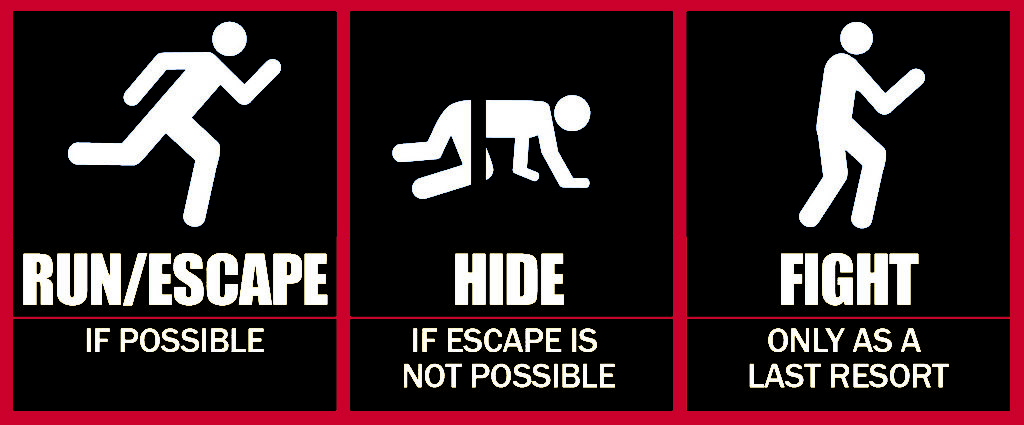
Three options for dealing with an active shooter situation:
Run
Try to escape the area as quickly as possible. When you go into an area, be aware of at least two exit routes and have an escape plan in mind.
Be committed to escaping regardless if others refuse to get out
Help others escape if possible
Keep your hands up and visible if you encounter law enforcement
Call 911 when you are in a safe area
Hide
If you can’t escape, find a location where the active shooter is less likely to find you
Your hiding place should be out of view
Provide protection from gunfire if possible (brick, concrete, cinder block wall)
Use an office or room with a locked door. Use heavy furniture or office equipment to block the door.
If the active shooter is nearby,
Turn off the lights
Silence your cell phone or any other source of noise (TV, radio, etc.)
Be silent
If possible, call 911 and alert the dispatcher where the shooter’s location is. If you cannot talk, leave the line open to allow the dispatcher to listen.
Remember, you may have to hide for hours until law enforcement secures the threat.
Fight
As a last resort, only fight when you cannot hide and your life and/or your family are in imminent danger.
Act as aggressively as possible and fully commit to your actions
Improvise weapons using items around you (fire extinguishers, chairs, etc.)
Law enforcement that arrives first on the scene have the primary job of eliminating the threat, it is unfortunately not to render help. They must stay focused on the situation and work to end the threat as soon as possible.
Help will come as more first responders arrive. It’s an unfortunate reality that we are faced with these situations but being aware of your surroundings and having a plan of action will help you survive. Take a look at this video made by the City of Houston, TX that reviews that same 3 tips for active shooter survival.
Struggle with staying on top of your bills and budgeting?
Do you stress out and dread when the 1st of the month rolls around?
Tired of living paycheck to paycheck?
Have constant arguments with your spouse around the family finances?
Have no clue on how to even get in control of your financial life?
Download this FREE Monthly Budgeting Action Plan, which includes Worksheets with step by step instructions on guiding you exactly on what you need to do to set up your own family budgeting plan that works for you and your family.
Struggle with staying on top of your bills and budgeting?
Do you stress out and dread when the 1st of the month rolls around?
Tired of living paycheck to paycheck?
Have constant arguments with your spouse around the family finances?
Have no clue on how to even get in control of your financial life?
Download this FREE Monthly Budgeting Action Plan, which includes Worksheets with step by step instructions on guiding you exactly on what you need to do to set up your own family budgeting plan that works for you and your family.
Do you struggle with getting your kids to clean up their room?
Are you ready for your kids to be more responsible?
Would you like your kids to be able to manage their time better?
Ready for a simple way to teach your kids good money management habits?
Download this FREE Family Chore and Money System Action Guide. It includes worksheets with step by step instructions on guiding you exactly what you need to do to set up your own chore, schedule and money management plans.